Estimate the Risk of your Investments
Thailand property purchase investment calculator
Which type of property you are buying?
First hand or Second hand property?
Is the property construction completed?
What is the experience of the developer?
Does the developer own the land for the project?
Does the developer have any land mortgage?
Does the developer have EIA Approved certificate?
Does the developer have a Construction Permit?
Did the developer delayed the beginning of the construction?
Does the developer's company authorized capital match with the land estimated cost?
What type of ownership you have chose?
What is the payment/installment schedule given by developer?
Does the seller has a property ownership papers?
Does the property has any mortgage?
Does the property has any debts to management company?
What is the payment plan for the deal?
How do you split all taxes for ownership transfer?
What type of ownership of the property?
Does the sales and purchase agreement has transfer acceptance act?
From the developer or second hand?
Is the property construction completed?
What is the experience of the developer?
Does the developer own the land for the project?
Does the developer have any land mortgage?
Did the land plot was split accordingly each house layout?
What ownership type you have chose?
What is the payment plan given by the developer?
Does the developer have a Construction Permit?
What type of ownership has the property?
Does the seller have the property ownership papers?
Does the property has any mortgage?
If the land is leasehold, who is the legal owner?
If the land is leasehold, what are the terms of consent letter?
What is the payment plan for the deal?
Does the sales and purchase agreement has transfer acceptance act?
How do you split all taxes for ownership transfer?
/ 10
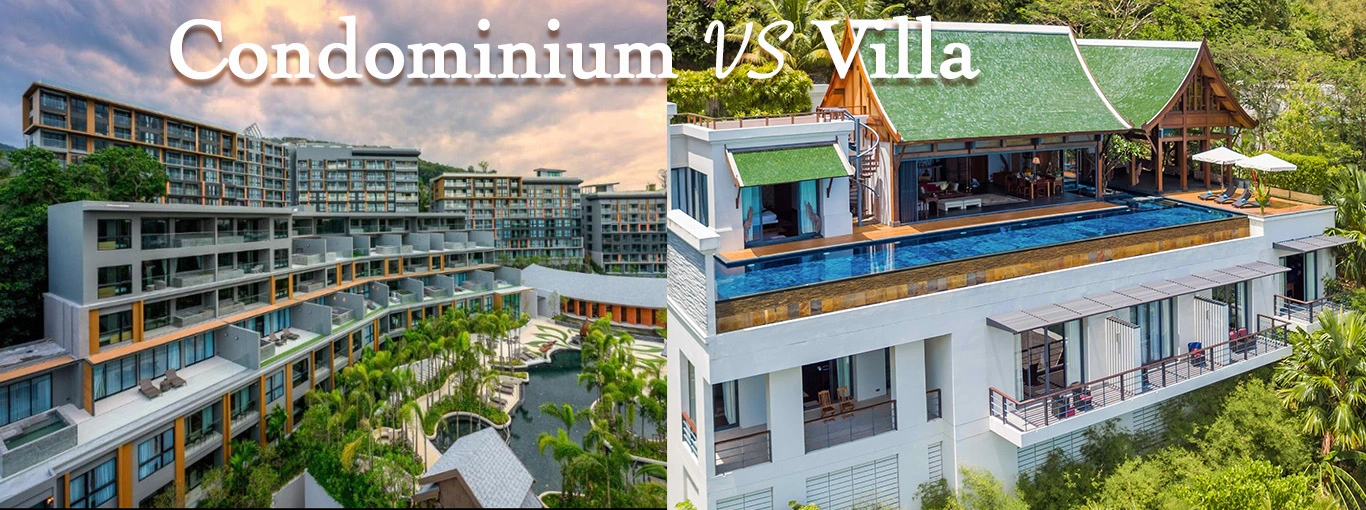
Types of residential property for foreigners in Thailand.
Here we will talk about two main types of real estate:
1. Condominium
2. Villa (House)
Other, non-standard types of real estate are also normally divided into a Building and a Land plot. That is, all the rules specified in this calculator will also be suitable, but the approach should be detailed for each object, and we recommend doing separate due diligence for a specific property.
So number 1 - Condominium.
Residential complex with a common infrastructure, equally owned by X number of owners.
That is, when a condominium is completed, its area is divided into many different owners. At the same time, there are still common areas that belong to everyone at once.
In a simple definition, a condominium is an apartment building where you can fully own one or more apartments. In this case, you will be required to pay for the maintenance fees of common areas.
No. 2. Villa.
House (villa) - Most often, our buyers purchase houses in the status of "Villas". In Thailand, there is no clear definition of the concept of "Villa", and in a simple way - any house with a pool and a separate territory is called that.
In any case, in Thailand buildings and Land are always separated. That is, in fact, you purchase a house and separately a land (rent the land in case of leasehold).
What about Townhouse? This type of property does not legally exist. And all so-called objects can be in the classification of Condominium (rarely) or House (often).
A first-hand property is any completed, under construction, or projected property - which is being sold by a developer.
A second-hand property is any next resale of that property.
So what is the assignment of the contract is the first hand or second hand. In fact, this is both together, because first, you need to do the assignment of the contract (legal relations with the first buyer), and then the initial registration of completed property from the developer.
Every time you come to the developer's office, you will be shown a large portfolio of the construction company. If you work with big developers like Laguna Property, all the information there will be more or less real.
But, there are new developers - who use are tricky, they take the portfolio of their main contractor and pass it off as their previous experience. In fact, this may be their first project and they have nothing more to show.
Important! When you are shown a portfolio with the names of finished projects, Google these projects and their websites. The name of the company / brand of the developer is always indicated there, then you compare it with what the seller shows you.
Land ownership is very easily verified.
You can even try using an online translator. But keep in mind, that land documents can be provided in the old version, where the information has not yet been updated. In order to get an updated document on land - you need to contact the local land office and make a request there - they will issue it without any problems. But here you will need Thai-speaking assistance.
So, to check the land, you need to ask the developer for a document, in English, it is called "Title Deed", in Thai "Chanote".

This is what the document looks like. Keep in mind - if the national emblem is NOT red, it is no longer Chanote.
The only type of land in Thailand is suitable for building a condominium.
In addition to Chanote, it is also called Nor Sor See (NS4). Keep this in mind.
All transactions of the land are written on the back of this document, an example is given below.

If the name of the owner does not match the name of the developer's company, you can ask for additional documents. In Thailand, there is a case when a developer uses several legal entities for one project. In this case, they must have an additional document (Consent letter) available - in which the consent of the land owner for the development and sale of units will be written.
Mortgaged land.
By law in Thailand, a developer is not prohibited from selling apartments in a condominium if its land is mortgaged, and if the buyer is informed about it. Yes, this is true, and because of this, there are a lot of problems since some developers do not have money for the project at all. For example, they have $1 million to buy land, then, in order to develop the project, they get a loan in a maximum amount of $800,000 from a bank, putting the mortgage for the land. Accordingly, the risk of buying such a project is high - if they do not have sales, they will not be able to complete the project.
To check land mortgages, you need to:
1. Bring a copy of the Chanote to the Area Land Office and request an updated copy of the document.
2. Check for official mortgages.
Again, here you'll need the help of Thai-speaking friends or your agent.
Below is an example, Chanote with a mortgage at a local bank,
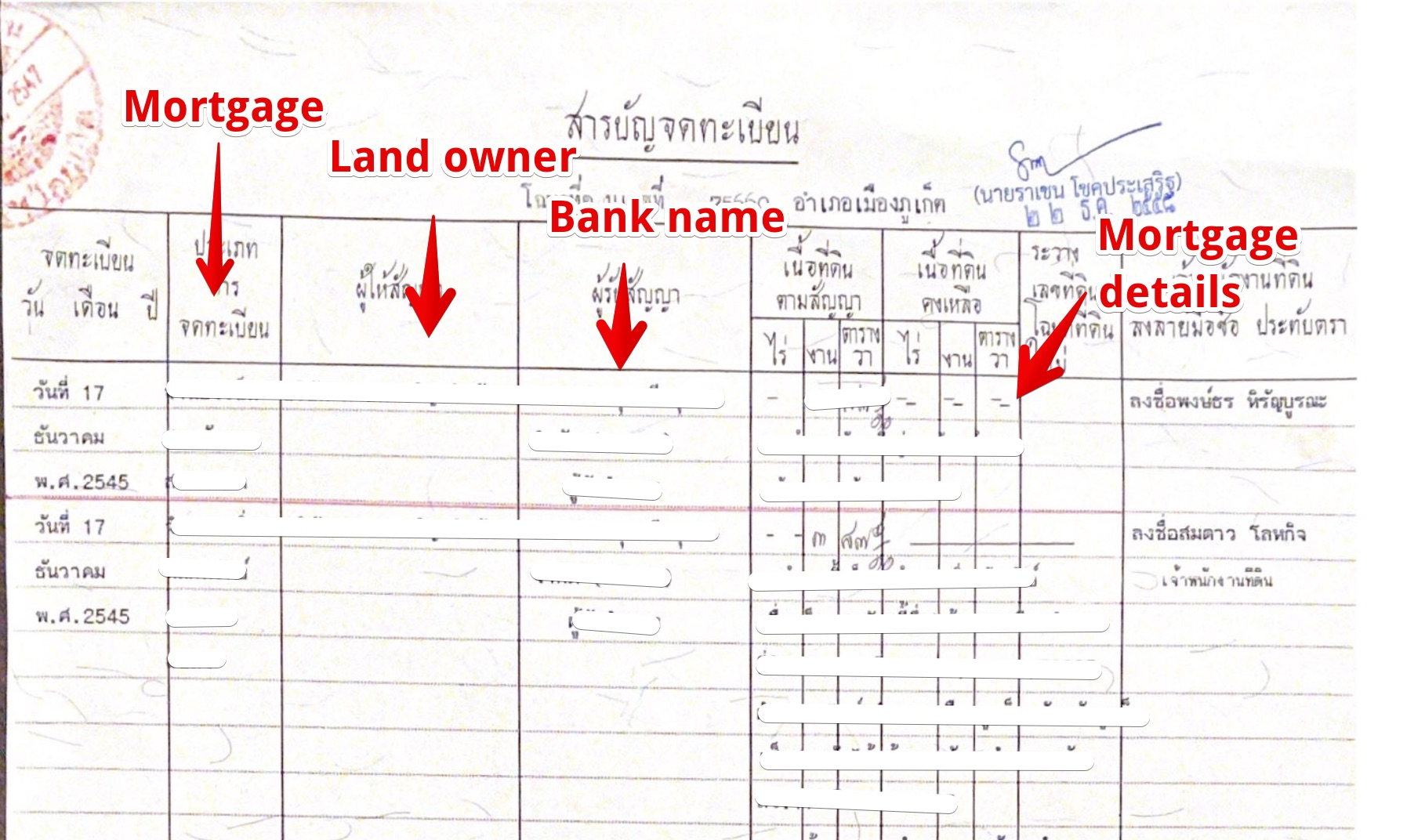
As you can see - no signs "WARNING!", the fact that the land is mortgaged is a normal transaction for the land office. Keep in mind that no one will tell you about this, they will simply show the document and that's it. Everything must be checked by you or your representative.
Unofficial mortgages.
In Thailand, there is such a case - Private loans secured by real estate.
For example, there are people/companies who cannot get money from the Bank and go to private investors.
It looks like this:
Signing a loan agreement with a pledge of real estate,
But at the same time, there is no official mortgage placed on Chanote,
With such a pledge scheme, the owner of the land does not have original documents in his hands!
Environmental Impact Assessment -
Assessment of the impact of construction on the environment.
According to Thai building legislation, condominium projects, with certain criteria, must undergo an environmental impact assessment before obtaining a building permit. Once the inspection is passed - The project receives an EIA Approved certificate, which allows them to obtain a building permit and start building.
In a simple way, this is an environmental certificate required for almost all condominium projects.
Obtaining a certificate is a complicated procedure, which includes several inspections by the state commission, laboratory tests, and a detailed study of the entire project.
The whole process takes from 3 to 18 months, sometimes even more.
EIA is the most important document for building a condominium.
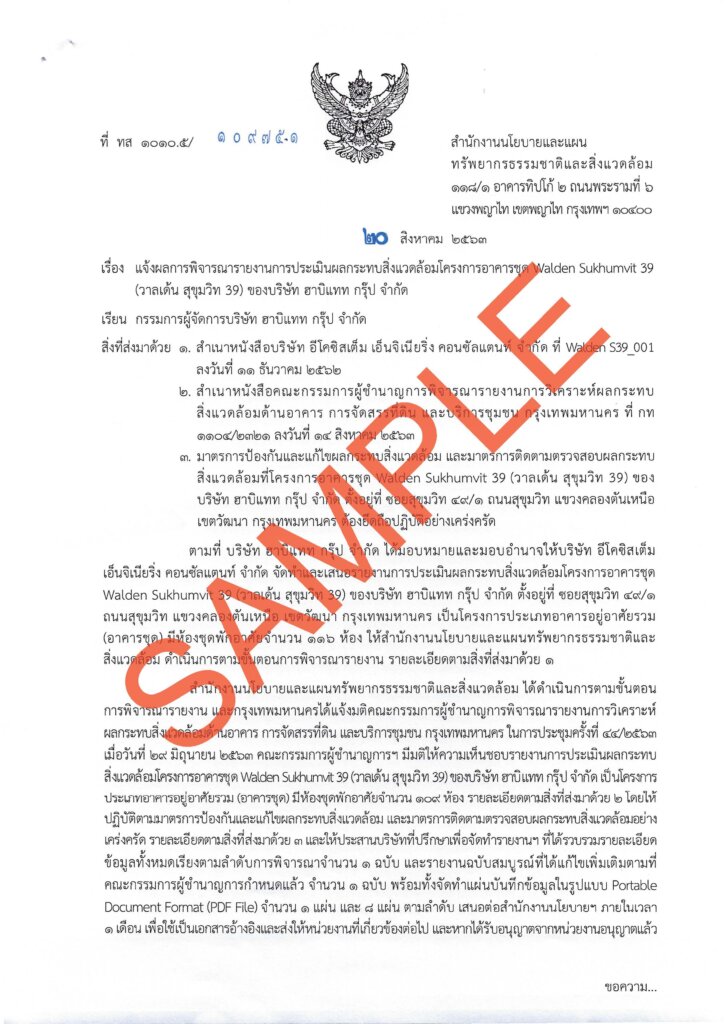
When is the EIA "in process" status?
Sometimes it happens that the developer submits a project for a certificate and it is approved with some amendments.
Then the document says that the project is accepted, but for the final approval of the certificate, amendments must be made. So in our practice, it happened like this - that the developers use this document for an EIA Approved certificate.
Therefore, IMPORTANT!, be sure to fully translate the text of the Thai EIA document.
When is an EIA not required?
For some projects, a certificate is not required if the projects:
- Less than 80 apartments,
- and/or 4,000 sq.m. piece of land,
For smaller projects, an Initial Environmental Examination (IEE) is sometimes obtained - but not always.
It is also important, for example in Phuket, that even small projects receive EIA because there are a number of other factors, such as the presence of nearby living, rivers, beaches, seas, rocks, etc.
For specific areas, you need to check with local land offices.
It is important for the buyer to understand that it is not difficult to obtain a building permit in Thailand.
Technically, the project must comply with all building and legal standards, then there will be no problems with arroval.
You also need to know that if the project requires an EIA, then they can only obtain a building permit after obtaining an EIA.
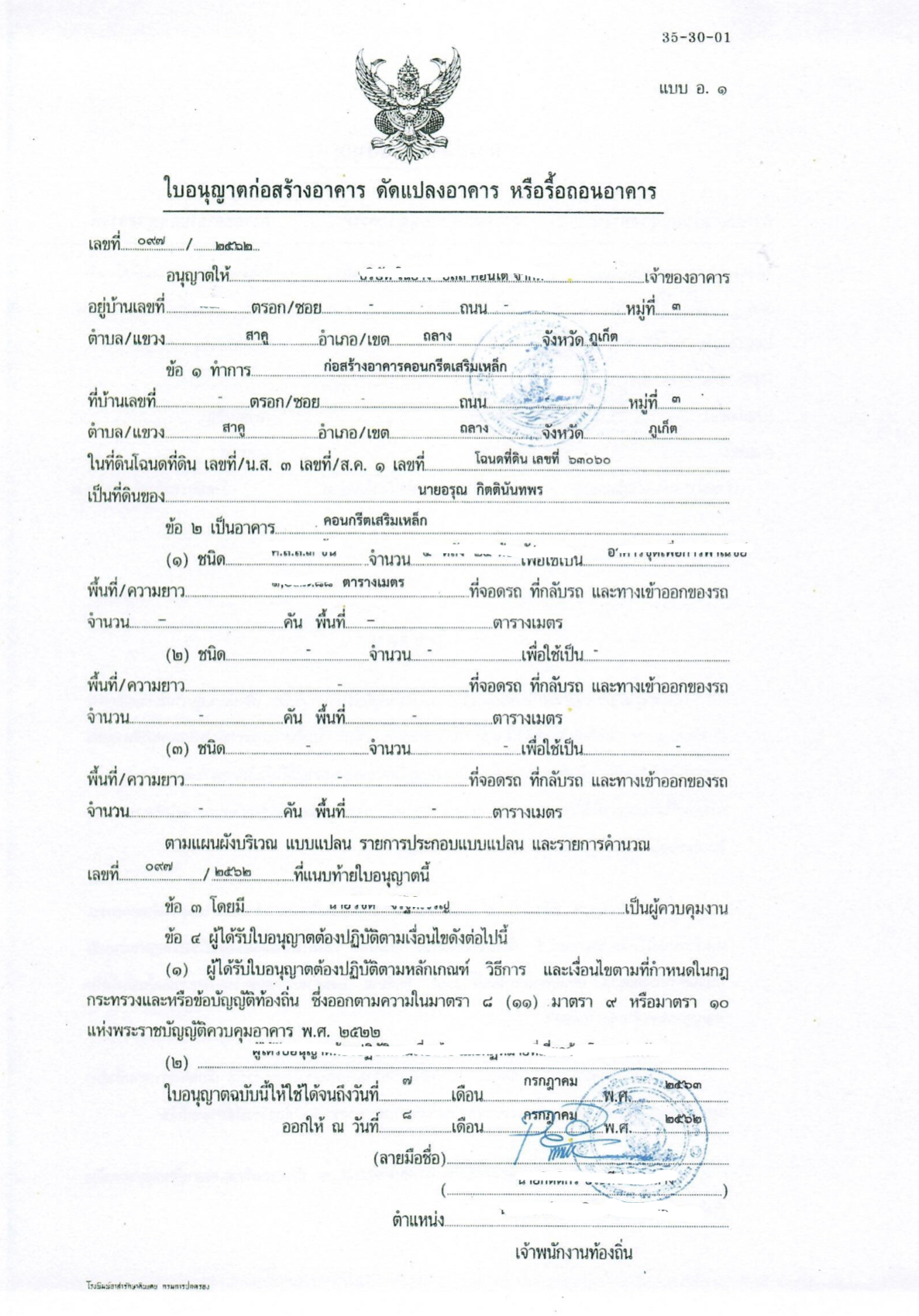
Example of a building permit:
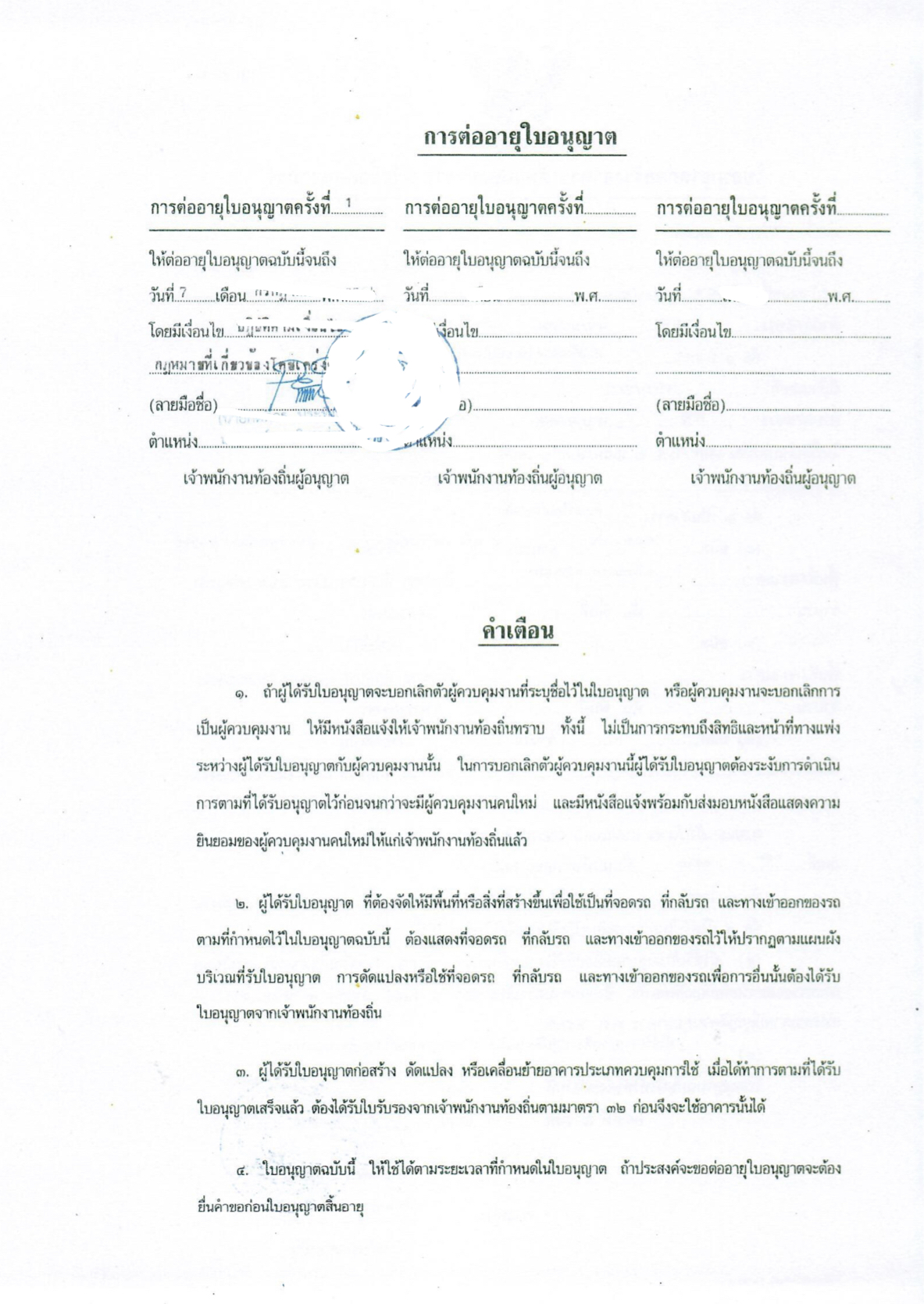
Date of the start of construction of the condominium.
Carefully check the marketing materials of the developer. In our experience, we saw that it is impossible to change all the start dates for construction.
Look at the pages on social media, and go through the feed to the end. Look at the website - sometimes the information is not updated. Also, many real estate agencies initially list projects on their websites and do not update the information later.
Carefully check the reviews and compare the facts, it is important to understand that if the developer delayed the start of construction, means he has some problems.
Possible problems:
- Not enough units sold,
- lack of funding,
- Required documents not approved/issued, etc.
IMPORTANT! According to Thai law, the developer must comply with the construction completion date, and prescribe it in the contract, but the construction start date is not so strictly controlled.
Also, under the condominium law, any developer can delay the completion of construction for 12 months from the date specified in the contract without any consequences for themselves. In our experience, almost all developers use this loophole and hand over objects a year later than the contract or with a longer delay.
The company authorized capital and land value.
This is another important parameter that will allow you to check the reliability of the developer.
If the land is owned by a developer company, the authorized capital of the company must be equal to or greater than the value of the land.
Each sale/lease contract is accompanied by the DBD documents of the company that sells the condominium unit to you and enters into an agreement with you. By law - this company must own the land (whether mortgaged to the bank or not) or have a Consent Letter from the actual owner of the land for the sale of apartments *
So, if the developer claims that the land has been bought out and belongs to him, you need to compare the cost of the land and the authorized capital of the company in the DBD documents.
In the example below, you can see that the authorized capital of the company is 4,000,000 baht.
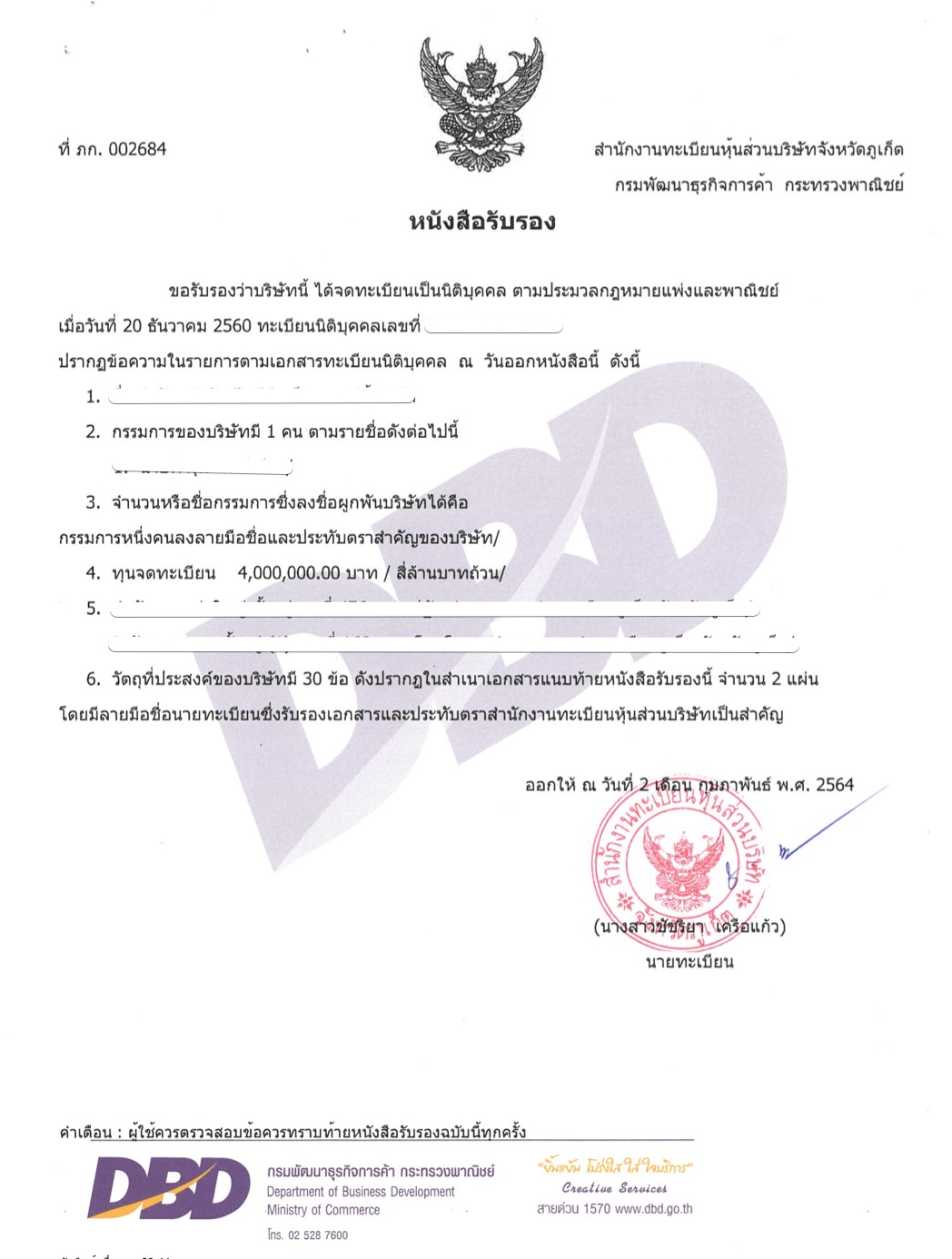
And if the developer said that the land worth 100,000,000 baht belongs to him, but at the same time the amount of the authorized capital is small - something is wrong, you need to ask more questions.
Forms of ownership in the condominium.
1. Foreign Freehold (Full foreign ownership)
The most right and safe way to own a condominium with a minimum of risk. Only 49% of apartments can be sold in this way, according to the law on condominiums.
2. Leasehold (30-year lease with two or more renewals)
51% of apartments in Condo are sold to foreigners in this way. This form of ownership is questionable, in fact, you pay rent 30 years in advance. There is a certain amount of risk here - since all official transactions with this object, according to the law, must be performed with the written permission of the actual owner of the land. In our experience - sometimes this brings additional costs and a lot of inconveniences when reselling the property.
3. Thai LLC (Ownership through a Thai legal entity).
In this way, apartments can also be purchased from the 51% percent of condominium apartments that goes within the Thai quota. But there is some risk because a foreigner can only own 49% of the company's shares. The rest of the shares need to be properly distributed among Thai citizens/companies and secure yourself with documents.
The seller must provide you with all the documents for review before signing the booking contract or contract. Depending on the type of property, the documents should consist of:
1. Chanote (Title deed) - ownership of a unit in the case of a condominium.
It looks like this:
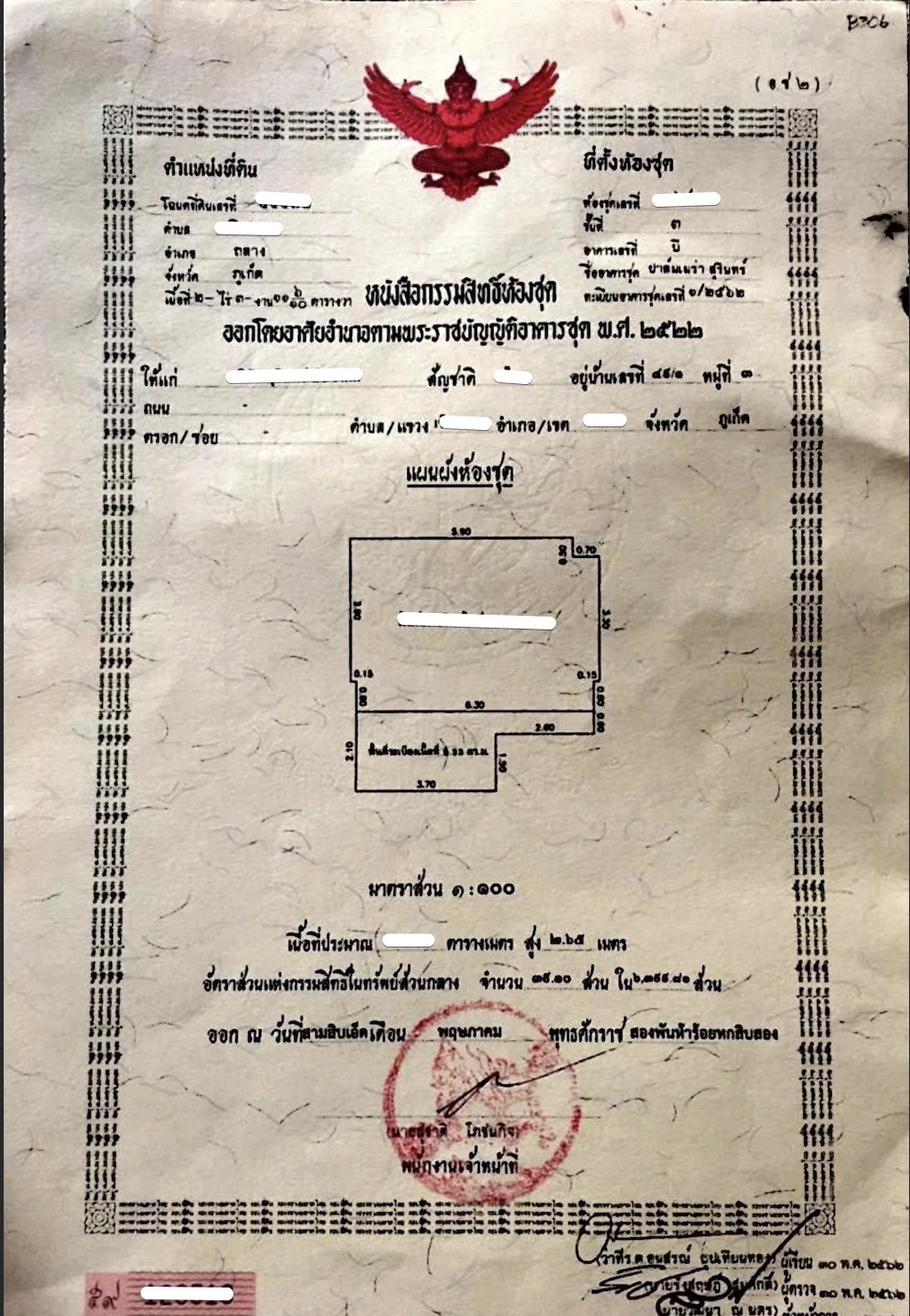
On the backside of this document, you will see the name of the owner and the type of transaction.
Looks like that:
2. Registered sales and purchase agreement
This document is not always provided since the real cadastral value of housing is indicated there. But we always require it for full verification of documents.
Looks like that:
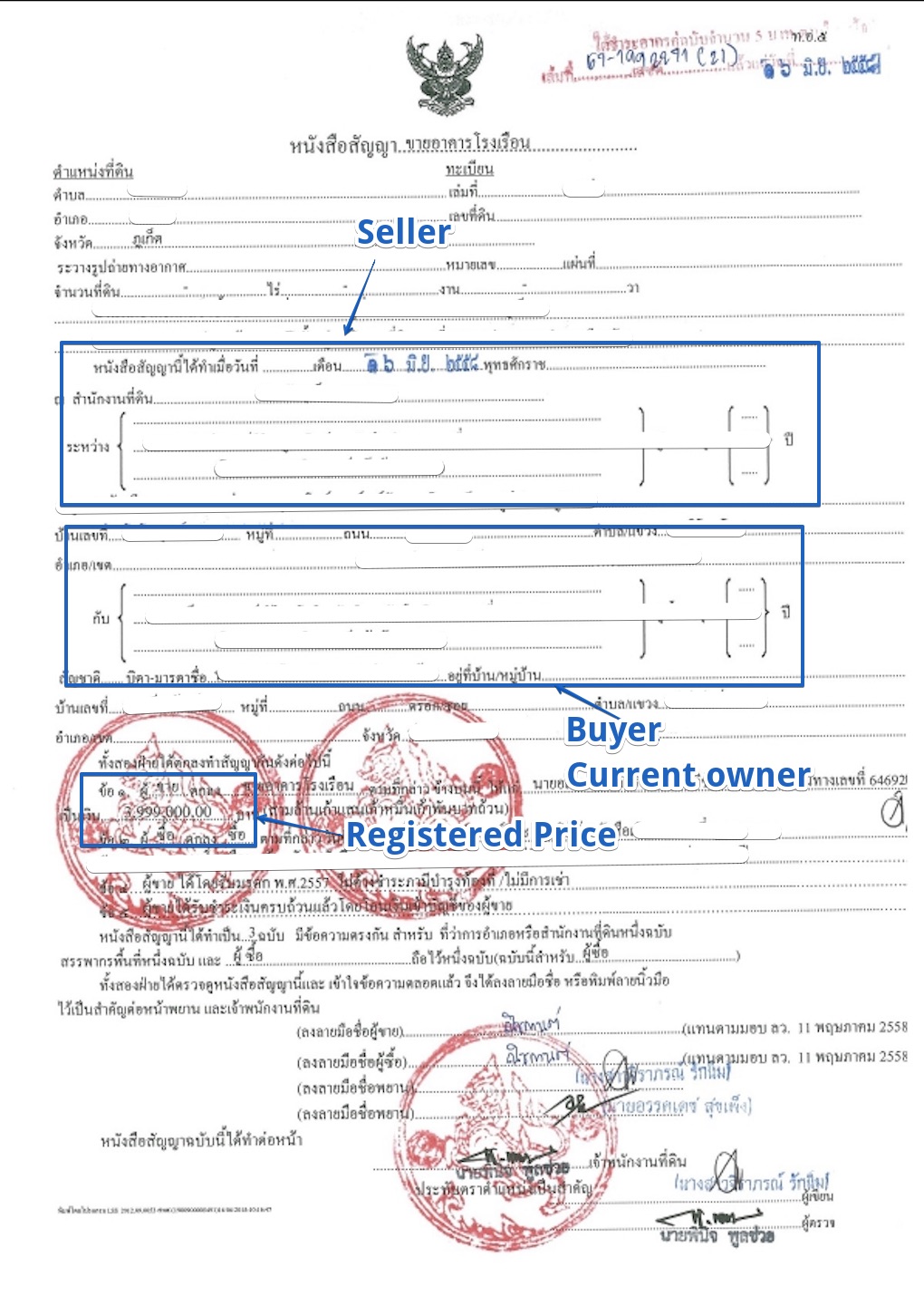
3. Blue Book / Yellow Book.
This is a document on the registration of the address (house book).
If the color is dark blue - The name of the foreigner can't be written there,
If the color is yellow (very rare) - we can put the name of the foreigner inside.
The first page will look like this:
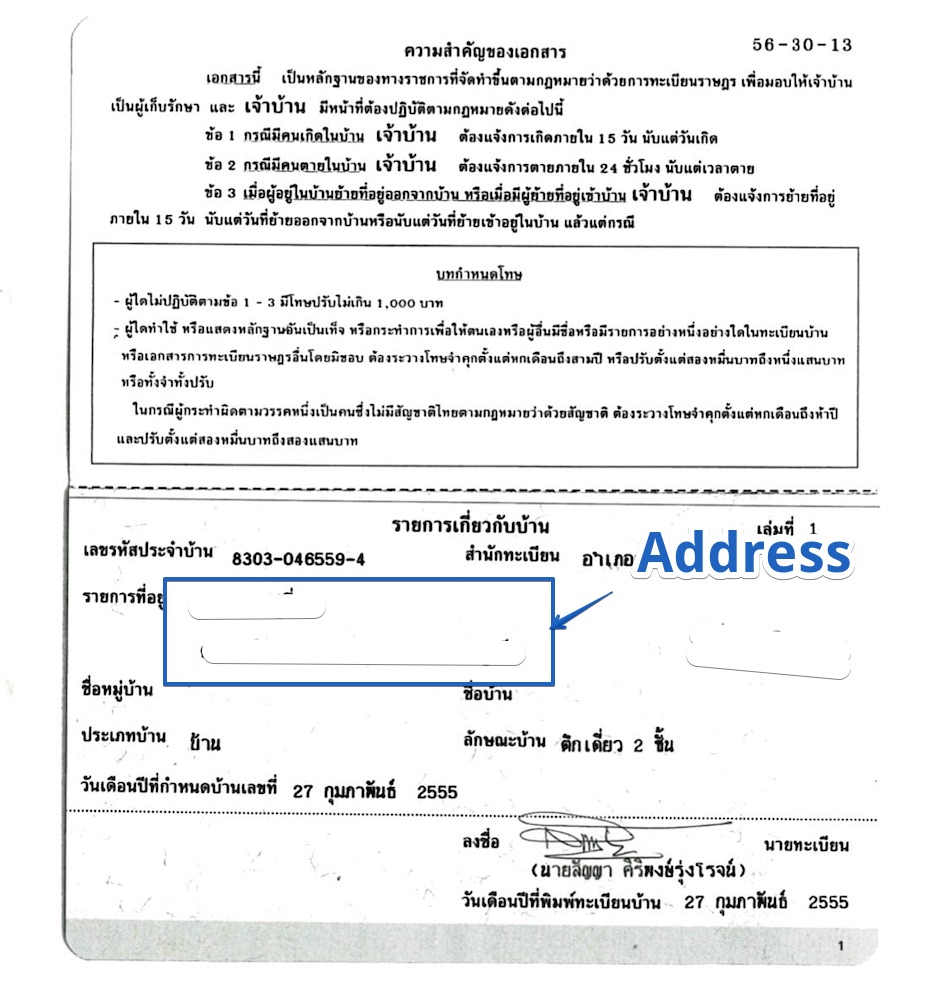
4. Registered leasehold agreement.
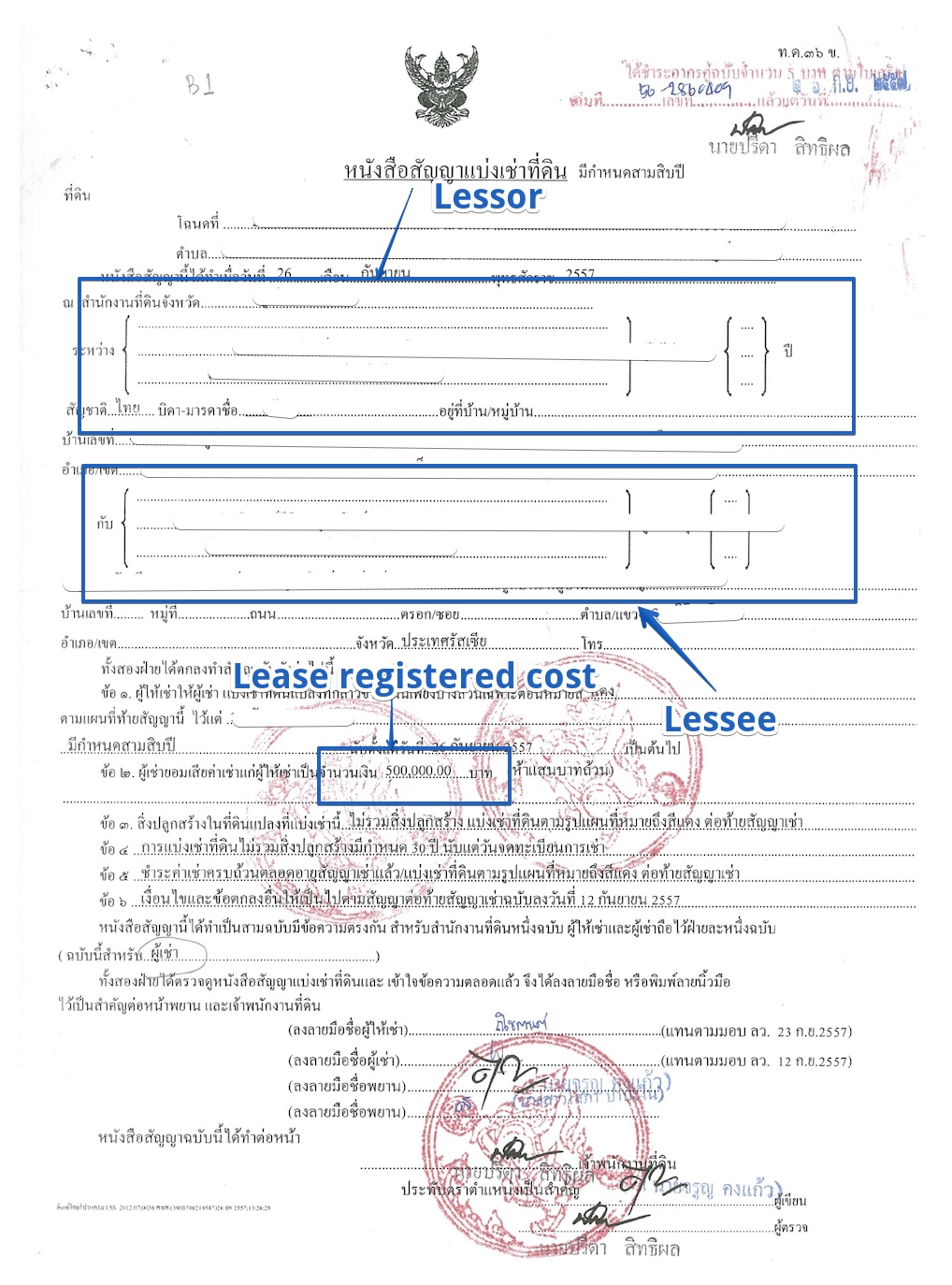

5. Initial lease agreement with the owner. (Leasehold only)
This is the same contract that includes all the terms of the transaction and the extension of the lease period. You definitely need it, because, without it, the transfer of rent and renewal is impossible.
Mortgage of the apartment.
According to the law, it is not forbidden to sell apartments in a condominium if the apartment is mortgaged in a bank, with one amendment - the buyer must be warned that the apartment is pledged.
As a fraudulent scheme, we have seen in our experience that the seller offered to sign a copy of the Chanote in the Thai language in the sales and purchase agreement, in this copy of the document, it was indicated that the apartment has a mortgage. But the buyer, not knowing the Thai language, signed this contract - thereby confirming that he was warned about the pledge.
The conclusion is: You must translate every Thai document you sign!
What are the official mortgages of apartments in a condominium:
- Bank mortgage
- Mortgage from a private person/company
- Registered lease (leasehold) - this is not an actual mortgage, it just means that someone will continue to live in the apartment until the lease period ends, for example, 30 years.
To check the mortgage of an apartment, you need to:
1. Bring a copy of the Chanote to the District Land Office and request an updated copy of the document.
2. Check for official mortgages.
Here you can use the help of Thai-speaking friends or your agent.
Below is an example, Chanote with a mortgage at a local bank,
As you can see - no signs "WARNING!", the fact that the apartment is mortgaged is a normal transaction for the land office. Keep in mind that no one will tell you about this, they will simply show the document and that's it.
Everything must be checked by you or your representative.
Unofficial mortgage.
In Thailand, there is such a case - Private loans secured by real estate.
For example, there are people/companies who cannot get money from the Bank and go to private investors.
It looks like this:
Signing a loan agreement with a mortgage of real estate,
But at the same time, there is no official burden placed on Chanote,
With such a scheme, the owner of the land does not have original documents in his hands and cannot provide them to you.
How to check the debts of the condominium unit to the management company?
Each condominium by law must have a management company, it is called CJP (Condominium Juristic Person). This company's duty is the maintenance of the condominium, collection of payments for maintenance, security, etc.
Important! CJP is not a rental management company, sometimes you will see a hotel chain like Wyndham manage the complex. So in this case, there are usually two MC in the complex. One of them is CJP and the other one is for rental management.
Before buying a second home - you need to make sure that there are no debts for condominium maintenance, electricity, or water. Therefore, before signing the contract, it is necessary to make a request to the CJP for debts and ask the seller to pay everything. Upon payment, the seller must provide you with all the receipt documents.
Taxes and fees on property ownership.
We have three types of transactions:
1. Transfer ownership (Foreign Freehold)
With this form of ownership, you must pay:
- Property transfer tax, 2% of the registration value*. Paid by buyer only or 50/50 by buyer and seller.
- Special Business Tax (Special business tax), 3.3% of the registration value. Paid only by the seller. Applies only in the first 5 years of ownership of the object, then it is changed to another payment.
Another payment is the Duty Stamp, applied if the seller has owned the object for more than 5 years, and is 0.5% of the registration value. Paid only by the seller.
- Withholding tax, is a kind of prepayment of income tax (capital gain). It is considered fixed when selling from a legal entity to an individual and on a flexible scale when selling from an individual to an individual. It is considered to be equal to 1% of the registration value of the object. Paid only by the seller.
2. Leasehold registration.
With this form of ownership, you must pay:
- Tax on the renewal of the right to rent, 1% of the registration value. Paid by buyer only or 50/50 by buyer and seller.
- Duty Stamp, is 0.1% of the registration value. Paid only by the seller.
3. Transfer (sale) of company shares (Thai LLC)
Transactions of this type require the work of a lawyer who will help and advise you at every stage. As such, there are practically no costs and fees here, but the lawyer's fee will be much higher than in any other transaction.
The transfer acceptance act of the apartment.
When you buy a second home, there are often fully furnished apartments with décor and appliances. And as a rule, the contract does not specify in detail what is in the apartment and what exactly is part of the transaction.
In our experience, there were real problems with this issue, when the seller, after registration, decided to take away the furniture and decor items, and the buyer expected that he was buying all this with the apartment.
Therefore, there must be a detailed act of acceptance and transfer, preferably with photographs and a detailed list of everything that is included in the price.
текст
Every time you come to the developer's office, you will be shown a large portfolio of the construction company. If you work with big developers like Laguna Property, all the data there will be more or less real.
But, there are new developers - who use a trick, take the portfolio of their main contractor, and pass it off as their previous experience. In fact, this may be their first project and they have nothing more to show.
Important! When you are shown a portfolio with the names of finished projects, search the Internet for these projects and their sites. The name of the company/brand of the developer is always indicated there, then you compare it with what the seller shows you.
Land ownership can be easily checked.
You can even try using an online translator. But keep in mind, that land documents can be provided in the old version, where the information has not yet been updated. In order to get an updated document on land - you need to contact the land office of the district and make a request there - they issue it without any problems. But here you will need a Thai-speaking assistant.
So, to check the land, you need to ask the seller for a document, in English, it is called "Title Deed", in Thai "Chanote".
This is what the document looks like. Keep in mind - if the National Emblem is NOT red, it is no longer Chanote.
Another type of land ownership is suitable for construction, called Nor Sor Sam Gor (NSSG), but it is difficult to subdivide into plots - so try to work with sellers who have already received Chanote.
In addition to Chanote, it is also called Nor Sor See (NS4). Keep that in mind.
All transactions in the land are stamped on the back of this document, an example is given below.
If the name of the owner does not match the name of the developer's company, you can ask for additional documents about the real owner of the land.
Land mortgage.
By law, the developer is not prohibited from providing services for the construction of houses if his land is mortgaged. Yes, this is true, and because of this, there are a lot of problems, since some developers do not have money for the project at all. For example, they have $1 million to buy land, then, in order to develop the project, they take a maximum of $800,000 from a bank secured by land. Accordingly, the risk of buying such a project is high - if they do not have sales, they will not be able to complete the project.
To check land mortgages, you need to:
1. Bring a copy of the Chanote to the District Land Office and request an updated copy of the document.
2. Check for an official mortgage.
Here you'll need the help of Thai-speaking friends or your agent.
Below is an example, Chanote with a mortgage at a local bank,
As you can see - no signs "WARNING!", the fact that the land is mortgaged is a normal transaction for the land office. Keep in mind that no one will tell you about this, they will simply show the document and that's it. Everything must be checked by you or your representative.
Unofficial mortgages.
In Thailand, there is such a case - Private loans secured by real estate.
For example, there are people/companies who cannot get money from the Bank and go to private investors.
It looks like this:
Signing a loan agreement with a mortgage of real estate,
But at the same time, there is no official stamp placed on Chanote,
With such a mortgage scheme, the owner of the land does not have original documents in his hands!
Sub-Division of the land plot for each house.
Some developers start building villas on solid plots, in general, there is nothing wrong with that. But in our practice, there were cases when the developer took full payment for the house, and built it, but could not subdivide the land plot after that, as there was a disagreement between the partners. And we consider such situations as more risky.
Types of ownership for Villas.
In Thailand, a house and land are always separated.
In fact, you will have two transactions, land and house. Even if they are written in one contract (which we DO NOT recommend), there are still two transactions.
For house and land, you can use:
1. Foreign Freehold (Full foreign ownership) - Only the house.
The most correct and safe way to own a house with a minimum of risk. Any house can be owned by a foreigner.
2. Leasehold (30-year lease with two or more renewals) - House and Land
Since land cannot be owned by foreigners in Thailand, Leasehold is the most popular form of land ownership for villas/houses. There is a certain amount of risk here - since all official transactions with this object, according to the law, must be carried out with the written permission of the actual owner of the land. In our experience - sometimes this brings additional costs and a lot of inconveniences when reselling.
3. Thai LLC (Ownership through a Thai legal entity) - House and land.
A convenient way to own objects, the cost of which is above the market average. Technically this way adds more security to the property owner. But there is also more uncertainty in terms of the company's Thai shareholders. This method is also the most financially costly, with annual payments.
Building permit.
It is important for the buyer to understand that it is not difficult to obtain a building permit in Thailand.
Technically, the project must comply with all building and legislative standards, then there will be no problems with the building permits. There is no difficulty in building villas. But you still need to check the document.
Example of a building permit:
Land ownership is very easily checked.
You can even try using an online translator. But keep in mind, that land documents can be provided in the old version, where the information has not yet been updated. In order to get an updated document - you need to contact the land office of the district and make a request there - they issue it without any problems. But here you will need a Thai-speaking assistant.
So, to check the land, you need to ask the seller for a document, in English, it is called "Title Deed", in Thai "Chanote".
This is what the document looks like. Keep in mind - if the National Emblem is NOT red, it is no longer Chanote.
Another type of property suitable for building villas is called Nor Sor Sam Gor (NSSG), but it is difficult to subdivide into plots - so try to work with properties that have already received Chanote.
In addition to Chanote, it is also called Nor Sor See (NS4). Keep this in mind.
All transactions in the land are stamped on the back of this document, an example is given below.
Mortgage of the apartment.
According to the law, it is not forbidden to sell villas/house if it is mortgaged in a bank, with one amendment - the buyer must be warned that the house is mortgaged
As a fraudulent scheme, we have seen in our experience that the seller offered to sign a copy of the Chanote in the Thai language in the sales and purchase agreement, in this copy of the document, it was indicated that the apartment has a mortgage. But the buyer, not knowing the Thai language, signed this contract - thereby confirming that he was warned about the mortgage.
The conclusion is: You must translate every Thai document you sign!
What are the official mortgages of houses:
- Bank mortgage
- Mortgage from a private person/company
- Registered lease (leasehold) - this is not an actual mortgage, it just means that someone will continue to live in the house/land until the lease period ends, for example, 30 years.
To check the mortgage of a house/villa, you need to:
1. Bring a copy of the Chanote to the District Land Office and request an updated copy of the document.
2. Check for official mortgages.
Here you can use the help of Thai-speaking friends or your agent.
Below is an example, Chanote with a mortgage at a local bank,
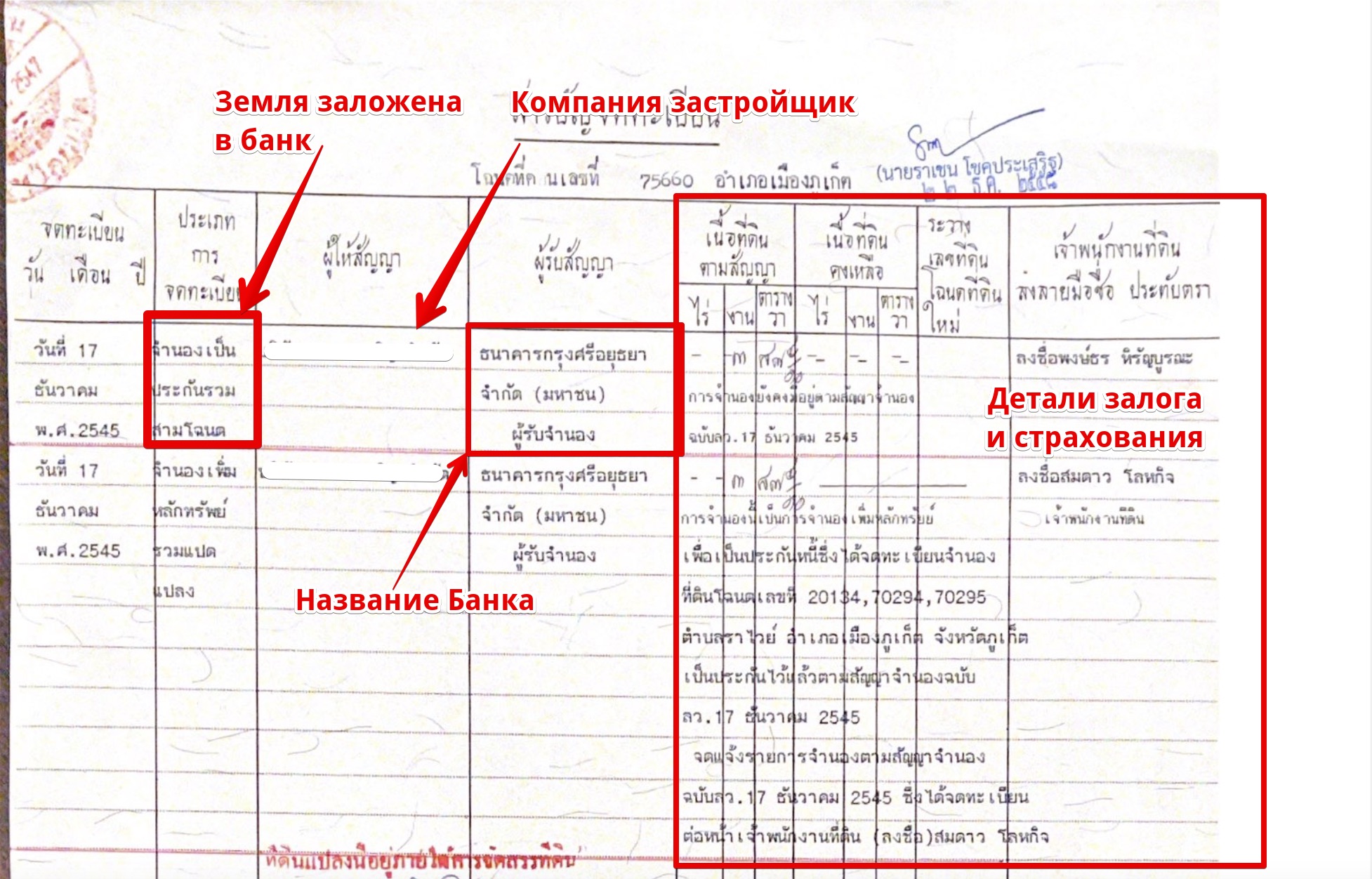
As you can see - no signs "WARNING!", the fact that the villa/land is mortgaged is a normal transaction for the land office. Keep in mind that no one will tell you about this, they will simply show the document and that's it.
Everything must be checked by you or your representative.
Unofficial mortgage.
In Thailand, there is such a case - Private loans secured by real estate.
For example, there are people/companies who cannot get money from the Bank and go to private investors.
It looks like this:
Signing a loan agreement with a mortgage of real estate,
But at the same time, there is no official burden placed on Chanote,
With such a scheme, the owner of the land does not have original documents in his hands and cannot provide them to you.
Consent letter, what is it?
With the leasehold of the land, all transactions must be made with the permission of the actual owner of the land, you need to find out in advance what it will cost you to receive this document.
The land office won't accept your documents for the assignment of Leasehold - if you don't have the Consent letter.
It is important to protect yourself when making payments!
According to the law, in Thailand, the registration of the house takes place in two stages:
1. Submission of all documents to the Land Office for verification and submission of a notice of intent to sell the house. After that, your lawyer must make publications about the sale of the house in three different sources *, after that you must wait 30 days for processing.
2. After 30 days, you will have a week to complete the transfer ownership process.
The transaction on the land plot is usually adjusted according to the dates with the registration of the house.
So it’s not safe to transfer money before the transaction is completed, since the seller can simply disappear after 30 days.
The transfer acceptance act of the house.
When you buy a second-hand home, there are often fully furnished apartments with décor and appliances. And as a rule, the contract does not specify in detail what is in the house and what exactly is part of the transaction.
In our experience, there were real problems with this issue, when the seller, after registration, decided to take away the furniture and decor items, and the buyer expected that he was buying all this with the house.
Therefore, there must be a detailed act of acceptance and transfer, preferably with photographs and a detailed list of everything that is included in the price.
Taxes and fees on property ownership.
We have three types of transactions:
1. Transfer ownership (Foreign Freehold)
With this form of ownership, you must pay:
- Property transfer tax, 2% of the registration value*. Paid by buyer only or 50/50 by buyer and seller.
- Special Business Tax (Special business tax), 3.3% of the registration value. Paid only by the seller. Applies only in the first 5 years of ownership of the object, then it is changed to another payment.
Another payment is the Duty Stamp, applied if the seller has owned the object for more than 5 years, and is 0.5% of the registration value. Paid only by the seller.
- Withholding tax, is a kind of prepayment of income tax (capital gain). It is considered fixed when selling from a legal entity to an individual and on a flexible scale when selling from an individual to an individual. It is considered to be equal to 1% of the registration value of the object. Paid only by the seller.
2. Leasehold registration.
With this form of ownership, you must pay:
- Tax on the renewal of the right to rent, 1% of the registration value. Paid by buyer only or 50/50 by buyer and seller.
- Duty Stamp, is 0.1% of the registration value. Paid only by the seller.
3. Transfer (sale) of company shares (Thai LLC)
Transactions of this type require the work of a lawyer who will help and advise you at every stage. As such, there are practically no costs and fees here, but the lawyer's fee will be much higher than in any other transaction.
Property Due Diligence in Thailand.
Property Due Diligence is the method or process to find out the status and history of the property that you are intending to buy. This process will include checking the status of the current owner that they are in a good position to sell the property to you.
You need to make sure that you will not lose your money and gain nothing but stress and disappointment.
It is important to see the history of the property and its developers or current owners as it is relevant for you to consider buying the property or not. Problems regarding properties may persist therefore it is best to buy a clean property with a clear record.
Due Diligence consists of:
- Property background and current ownership at the land office,
- Checking the construction permit at the Municipal office,
- Due diligence for the property tax at the District office,
- Checking the court case against the property and owner,
- Checking the bankruptcy status of the owner,
- Site visiting
Be sure you are working with a good lawyer or agent to perform the fair due diligence result for you!